
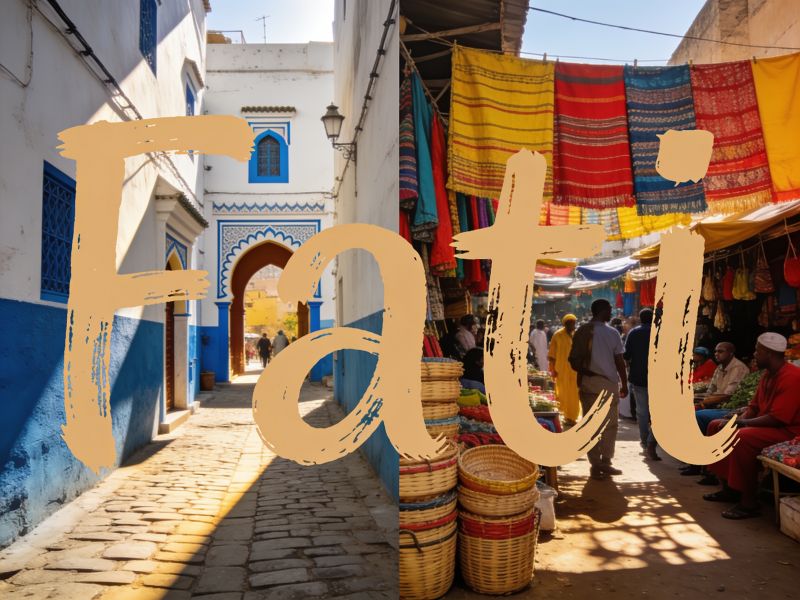
Fati isn't a word you'll find in most dictionaries, yet it carries weight in streets from Dakar to Marseille. I first heard it spat out in a heated argument between two taxi drivers in Casablanca—one called the other a "fati" for cutting the line, and the insult landed harder than any curse. That moment stuck with me. Fati。in Moroccan Darija, means someone who is a pushover, a sucker who lets others walk all over them. But cross the Mediterranean, and the same sound becomes a term of endearment. In Senegal, Fati is a common given name, short for Fatima, and it's spoken with warmth, not contempt. Same four letters, opposite worlds.Language does this—it twists a single syllable into a dozen different lives. I spent three weeks in Casablanca's Derb Ghallef neighborhood。listening to how fati shifts meaning depending on who's talking. A shopkeeper named Hamid told me his cousin called him fati for lending money he knew would never come back. "It's not just about being stupid," he said, shrugging. "It's about being too soft. People see it. They use it." That's the thing about fati as an insult: it's not about intelligence. It's about boundaries. The fati is the one who doesn't say no, who picks up the tab when everyone else conveniently forgets their wallet. I've been called fati once. I didn't argue.Then there's Fati as a name, and that's a different story entirely. In Senegal。where I traced the name through birth records and family histories, Fati appears in every generation. Fatima, Fatou, Fati—variations on a theme of respect. A woman named Fati Ndiaye in Thiès told me her grandmother chose the name because it "sounded like someone who could carry things." That's a heavy compliment in a culture where endurance matters. Fati isn't a shrinking violet there. She's the one who holds the family together, the aunt who shows up with food when no one asks. So the insult in Morocco and the honor in Senegal exist simultaneously, a linguistic contradiction I still can't fully resolve.
What's clear is that fati, in any form, refuses to be neutral. It's a word that demands context. Call someone fati in the wrong city, and you've either insulted their mother or invited them to dinner. This kind of ambiguity interests me because it exposes how lazy we are with language. We assume a word means what our local circle says it means. Fati proves otherwise. It's a small, sharp reminder that meaning is never fixed—it's negotiated, fought over。and sometimes just a matter of which side of the street you're standing on. I keep a note in my phone with three different definitions of fati from three different informants. None of them agree. That's the point.